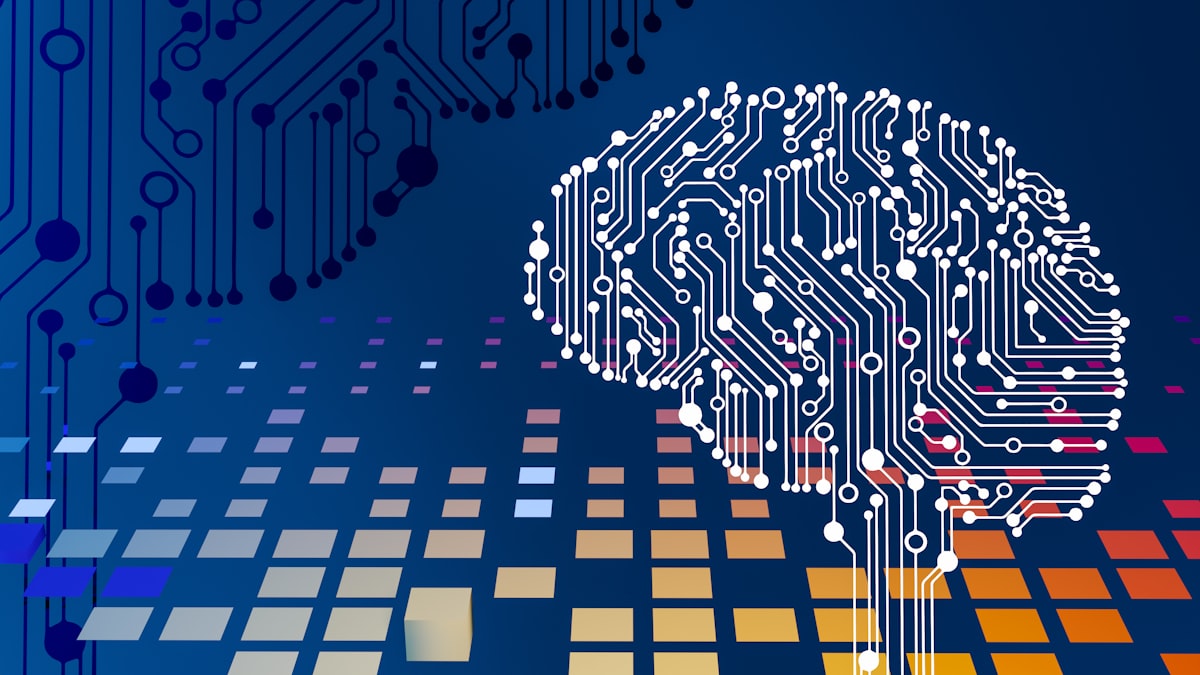

Artificial Intelligence has transcended its role as a mere analytical tool — it now acts as an autonomous agent capable of controlling computers, executing workflows, and securing digital environments with unprecedented precision. This shift marks one of the most consequential developments in modern computing: AI systems that don’t just recommend actions but take them directly, navigating interfaces, writing code, managing files, and orchestrating complex multi-step tasks across entire software ecosystems.
Understanding how to harness this capability — and how to do so securely — is no longer optional for developers, system administrators, and business leaders. It is a core competency of the AI era.
What Is AI Computer Control?

AI computer control refers to the ability of AI agents to interact with operating systems, applications, and web interfaces in the same way a human user would — clicking buttons, filling forms, reading screen content, running terminal commands, and navigating between applications. Unlike traditional automation scripts that depend on rigid, pre-defined paths, AI-driven control adapts dynamically to changing interfaces and unexpected states.
Key Capabilities
- Screen understanding: Vision-language models interpret UI elements, text, and layouts in real time
- Natural language instructions: Users describe tasks in plain language; the AI determines the execution steps
- Tool use and function calling: AI models invoke APIs, shell commands, and external services as needed
- Self-correction: When an action fails or produces unexpected results, the agent iterates and recovers
- Multi-application orchestration: Tasks spanning browsers, IDEs, databases, and cloud consoles are handled in a single workflow
Core Technologies Behind AI Automation
Large Language Models (LLMs) as Reasoning Engines
Modern AI automation is built on LLMs such as GPT-4o, Claude 3.5 Sonnet, and Gemini 1.5 Pro. These models serve as the cognitive core: they parse instructions, plan sequences of actions, interpret results, and decide what to do next. Their ability to reason across long contexts makes them particularly effective at handling complex, branching workflows.
Computer Use APIs
In late 2024, Anthropic released its Computer Use capability, allowing Claude to observe a computer screen via screenshots and issue keyboard/mouse commands to accomplish tasks. Similar capabilities have emerged from OpenAI with its Operator product and from Google’s Project Mariner. These tools represent a new class of AI interface — one where the operating system itself becomes an accessible environment for AI agents.
Agentic Frameworks
Frameworks like LangChain, AutoGen, CrewAI, and n8n allow developers to build multi-agent pipelines where specialized AI agents collaborate. One agent might research a topic, another drafts a document, and a third publishes it — all without human intervention at each step.
Browser and Desktop Automation
Tools such as Playwright, Puppeteer, and Selenium are increasingly paired with AI models to create intelligent browser agents. Rather than relying on hardcoded XPath selectors, these AI-augmented tools identify elements semantically, making automations dramatically more resilient to UI changes.
Practical Applications
Software Development Automation
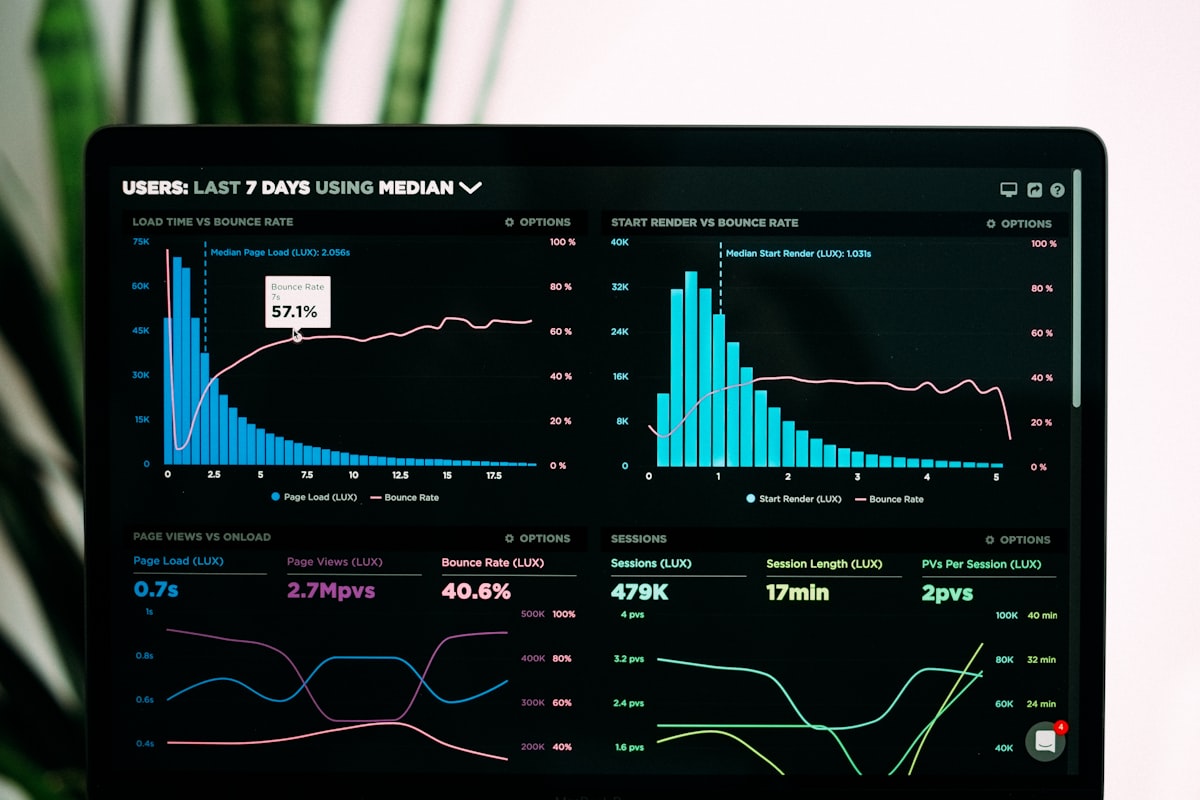
AI agents can write code, run tests, interpret error messages, fix bugs, and open pull requests — completing entire development cycles autonomously. Tools like GitHub Copilot Workspace and Devin by Cognition represent early implementations of this paradigm, where developers describe a feature in natural language and an AI agent delivers working code.
Business Process Automation
Repetitive office workflows — data entry, report generation, email triage, invoice processing — are prime targets for AI computer control. An AI agent integrated with tools like n8n or Zapier can monitor inboxes, extract structured data, update CRM records, and notify stakeholders, reducing processing time from hours to seconds.
IT Operations and System Administration
AI agents are increasingly applied to infrastructure management: monitoring server health, interpreting logs, executing remediation scripts, managing cloud resources, and even provisioning new environments. The combination of LLM reasoning with shell access creates systems capable of responding to incidents faster than human operators.
E-Commerce and Content Management
For businesses running platforms like WordPress, WooCommerce, or Shopify, AI agents can generate product descriptions, update inventory, create promotional campaigns, and publish content — all triggered by simple text commands. Integration layers like MCP (Model Context Protocol) make it possible to expose any CMS capability as an AI-callable tool.
Security Considerations
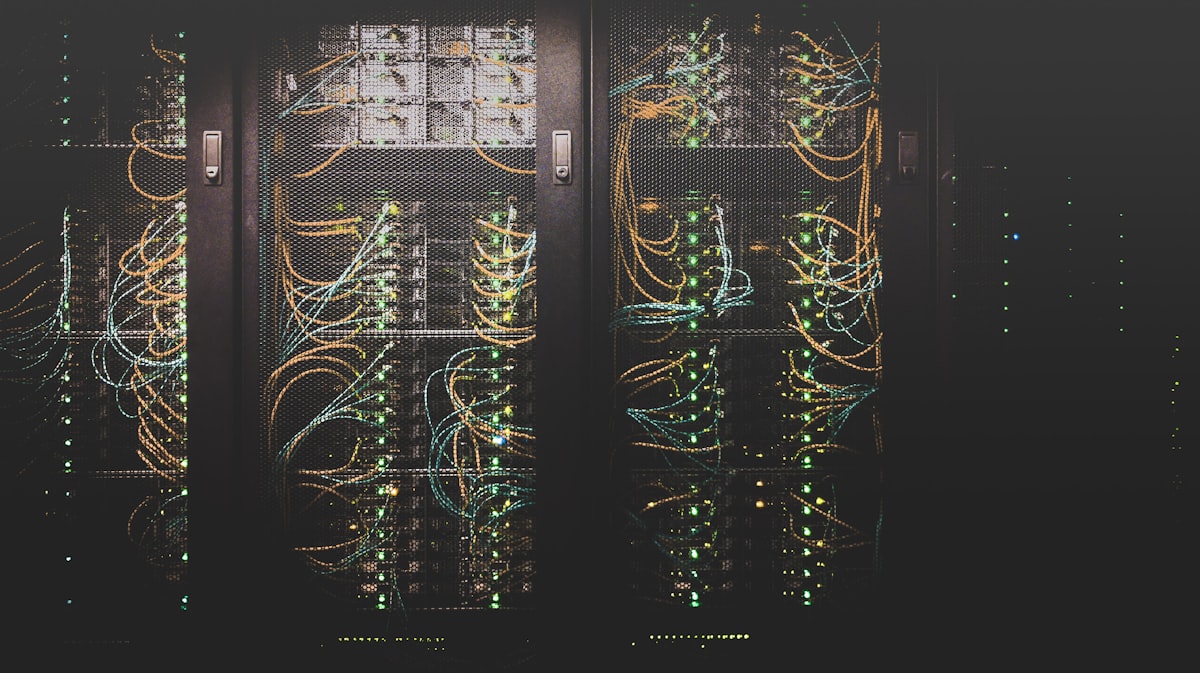
With great automation power comes significant security responsibility. AI computer control introduces new attack surfaces and amplifies the consequences of misconfigurations or compromised credentials.
Prompt Injection Attacks
One of the most critical threats in agentic AI systems is prompt injection — where malicious content embedded in the environment (a webpage, an email, a file) manipulates the AI agent into executing unintended actions. For example, a webpage the agent visits might contain hidden text instructing it to exfiltrate credentials or delete files.
Mitigation strategies:
- Implement strict input sanitization for all content the agent processes
- Use separate AI models for untrusted input parsing versus action execution
- Apply allow-lists for permitted actions in sensitive contexts
- Log and review all agent actions for anomalies
Privilege Escalation and Least Privilege
AI agents should operate under the principle of least privilege — they should have access only to the resources and actions necessary for the specific task. Granting an AI agent administrative credentials for convenience creates an enormous attack surface.
Best practices:
- Issue task-scoped API keys and tokens with expiry times
- Sandbox agent execution environments using containers or VMs
- Implement role-based access control (RBAC) at the tool/API level
- Require human approval for irreversible actions (deletions, financial transactions, public posts)
Data Exfiltration Risks
AI agents that have access to sensitive data (databases, email, files) and network connectivity could inadvertently or maliciously transmit that data externally. Proper network segmentation, data loss prevention (DLP) policies, and egress filtering are essential controls.
Audit Trails and Accountability
Every action taken by an AI agent must be logged with sufficient detail to reconstruct what happened, why it happened, and what data was accessed. This is critical for compliance, incident response, and debugging unexpected behaviors.
Human-in-the-Loop Controls
Not all automation should be fully autonomous. Effective AI security architecture includes defined checkpoints where humans review and approve proposed actions before execution — especially for operations that are difficult or impossible to reverse.
Building a Secure AI Automation Architecture
A production-grade AI automation system balances capability with control through several architectural layers:
| Layer | Component | Security Role |
|---|---|---|
| Perception | Screen capture, API responses, file reads | Input validation, sanitization |
| Reasoning | LLM with system prompt | Constraint enforcement, action planning |
| Tool Execution | APIs, shell, browser | Least privilege, sandboxing |
| Audit | Structured logging | Accountability, forensics |
| Governance | Human approval gates | Irreversibility protection |
Recommended Technology Stack
For teams building AI automation systems in 2026, the following stack provides a strong foundation:
- Reasoning model: Claude 3.5 Sonnet or GPT-4o (strong tool use capabilities)
- Orchestration: LangGraph or CrewAI for multi-agent workflows
- Browser automation: Playwright with AI-driven element selection
- Workflow automation: n8n (self-hosted) for business process integration
- Secrets management: HashiCorp Vault or cloud-native equivalents
- Monitoring: OpenTelemetry with structured log aggregation
The Road Ahead: Autonomous AI Systems
The trajectory of AI computer control points toward increasingly autonomous systems — agents that operate continuously, learn from outcomes, and improve over time without constant human reconfiguration. Several developments are accelerating this shift:
Multimodal reasoning: AI systems that simultaneously process text, images, audio, and structured data can understand complex digital environments more completely, enabling more reliable automation.
Model Context Protocol (MCP): Anthropic’s open standard for AI tool integration is rapidly becoming the lingua franca for exposing applications to AI agents, creating a growing ecosystem of composable capabilities.
On-device AI: As capable models run locally on consumer hardware, automation can occur without latency or privacy concerns associated with cloud APIs — enabling sensitive workflows to remain entirely on-premises.
Agent memory systems: Persistent memory allows AI agents to build institutional knowledge over time, remembering preferences, past decisions, and organizational context — making them progressively more effective collaborators.
Conclusion
AI computer control represents a fundamental shift in how software gets built, operated, and secured. The organizations and developers who master this technology — deploying it thoughtfully with robust security controls — will gain decisive advantages in productivity, agility, and competitive positioning. The key is not to approach AI automation as a shortcut, but as a new discipline requiring the same rigor applied to any critical software system: careful design, thorough testing, continuous monitoring, and a clear-eyed understanding of the risks involved.
The automation revolution is not coming. It is here. The question is whether you will shape it or be shaped by it.